
 EN
 ru
 pt
What Is PVC Glue and When Should You Use It?
Nov 16, 2026What Is PVC Solvent Cement (PVC Glue) & Its Common Use Cases Many plumbers, irrigation installers and plastic fabricators refer to PVC solvent cement as “PVC glue”, but it functions in a way that differs greatly from regular contact adhesives. If you are curious about whether PVC glue only bonds plastic surfaces or fuses plastic parts together, which viscosity grade suits your pipe dimensions, or whether it can work with CPVC, flexible vinyl and other plastic materials, this guide covers these topics. Improper product selection or careless application stands among the frequent causes of hidden pipe leaks, joint separation and failed plumbing inspections. We will cover its working mechanism, available grades, applicable scenarios, installation guidelines and purchasing specifications for industrial and commercial buyers.
How PVC Solvent Cement (Commonly Called PVC Glue) Works
PVC solvent cement consists of PVC resin dissolved in volatile organic solvents. Instead of forming a thin adhesive layer between two contact surfaces, it relies on solvent welding. When applied to clean rigid PVC-U materials, the solvent softens and dissolves the outer layer of the pipe and fitting. Once the two components are fully inserted and rotated, the softened plastic layers merge with each other. As the solvent evaporates, the fused plastic hardens and forms one continuous piece. A well-made solvent welded joint can reach strength comparable to the pipe substrate.
This chemical fusion process only takes effect on rigid PVC. It is not suitable for all types of plastic. It cannot form stable bonds on CPVC, ABS, PP, PE or silicone rubber. Adhesives designed for flexible vinyl, such as materials for pool liners and inflatable goods, use a separate formula and should not replace rigid PVC solvent cement for pressure-bearing piping. Widely accepted industry standards include ASTM D2564 for PVC solvent cement and ASTM D2855 for joining practices. NSF/ANSI 61 certification is required for pipelines that carry potable water.
Viscosity Grades and Their Suitable Applications
Viscosity is an important specification that many buyers overlook. Selecting an unsuitable grade may lead to cement running, sagging, or insufficient material inside the fitting socket.
· Medium-body PVC cement: The widely adopted grade for pipes up to 2 inches. It flows evenly and spreads smoothly, ideal for DWV drainage systems, irrigation lines and electrical conduit.
· Heavy-body PVC cement: A thicker blend with slower flow characteristics. It is formulated for large-diameter pipes or sockets with looser tolerance, and it resists dripping when applied on vertical joints.
· Low-viscosity clear PVC cement: Developed for PVC sheets, profiles and display fabrication. It is not recommended for pressure plumbing lines.
· Fast-set and slow-set options: Fast-set cement fits low-temperature environments and quick assembly work. Slow-set cement provides extra working time for installers handling large fittings under hot conditions.
Color serves only as an identification mark and cannot be used to judge product quality. Purple primer is frequently used for pressure pipes, while green cement is often marked for potable water systems.
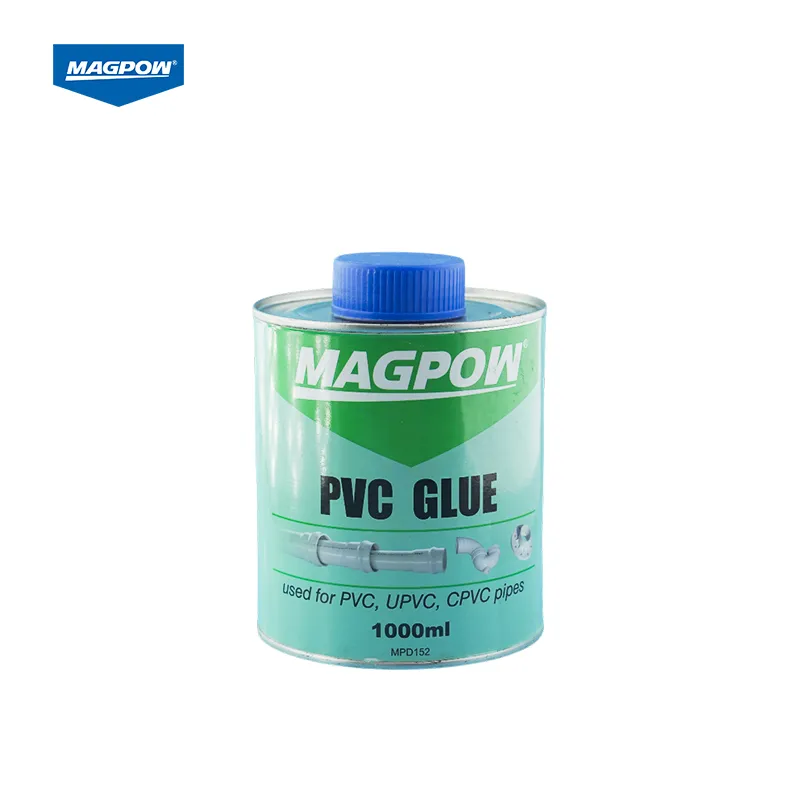
Suitable and Unsuitable Applications for PVC Solvent Cement
PVC solvent cement acts as the standard joining material for rigid PVC pressure water pipes, drainage waste and vent (DWV) systems, irrigation pipelines, electrical PVC conduit, PVC profiles and plastic tank assembly. It sees regular use among plumbing contractors, water treatment facilities, greenhouse operators and plastic fabrication workshops.
This product has clear usage limits that users need to observe. First, standard PVC solvent cement is intended for cold water service. Long-term exposure to hot water may soften PVC and weaken fused joints, so CPVC piping systems require dedicated CPVC cement. Second, it does not create reliable bonds on wood, metal or silicone materials. Third, it is not compatible with flexible vinyl inflatable products unless users choose specialized flexible vinyl repair adhesives. This cement also cannot fill large gaps between mating parts. When pipes fit loosely, it is better to replace the fittings instead of applying extra thick cement.
Step-by-Step Installation Guidance to Reduce Leak Risks
Surface preparation influences the stability of finished joints. Cut the pipe squarely, remove burrs, then wipe away grease, dust and surface moisture. Most plumbing codes require primer for pressure piping. Primer etches the PVC surface and supports better fusion. Apply primer first, then spread cement evenly over both the pipe end and fitting socket. Avoid over-application, as excess cement may accumulate inside the pipe and create blockages.
Insert the pipe fully in one steady motion and rotate it slightly to distribute cement evenly. Hold the assembled joint for 10–30 seconds to prevent disconnection. Wipe away surplus cement right after assembly. Do not apply pressure to the joint immediately. The joint may feel solid quickly, yet full curing requires adequate time. For pressure lines, allow at least 24 hours of curing time before pressure testing under normal room temperature. Low ambient temperatures slow solvent evaporation and call for longer curing periods. Do not apply cement on wet or frozen pipe surfaces.
Safety, VOC and Compliance Notes
PVC solvent cement releases flammable solvent vapors. Carry out work in well-ventilated spaces and keep the product away from open flames and static discharge. Wear nitrile gloves and safety goggles, and keep SDS documents accessible on site.
Many regions maintain strict VOC control rules. Low-VOC PVC cement is available for green building projects and indoor construction work. For export orders, check REACH compliance status. For potable water applications, confirm NSF 61 certification instead of relying only on general plastic adhesive certificates.
Bulk Sourcing Checklist for Purchase Inquiries
When sourcing PVC solvent cement for plumbing or fabrication projects, include these details in your inquiry:
· Type: rigid PVC solvent cement or flexible vinyl repair adhesive
· Viscosity grade: medium body, heavy body or low viscosity
· End use: DWV drainage, potable pressure water, conduit installation or sheet bonding
· Certifications: ASTM D2564, NSF 61, low-VOC requirement if applicable
· Primer compatibility: purple primer or clear primer
· Setting speed: standard, fast-set or slow-set
· Packaging specification, shelf life, batch test reports and storage instructions
FAQ
Do I always need primer with PVC solvent cement? Primer is specified by most plumbing codes for pressure piping applications. Some single-step cement products receive approval for non-pressure DWV drainage lines, yet primer helps form more stable welded joints for pressurized systems.
Can PVC solvent cement work on CPVC pipe? It cannot create proper fusion for CPVC materials. Use dedicated CPVC cement for hot water CPVC piping systems.
Is fully cured PVC solvent cement waterproof? Properly cured solvent welded joints deliver waterproof performance and suit underground and buried pipeline installations.
PVC solvent cement, commonly known as PVC glue, forms permanent fused joints for rigid PVC components and is not a universal adhesive. Match viscosity grade to pipe dimensions, follow primer requirements for pressure applications, and avoid using it on CPVC, flexible vinyl or plastics with low surface energy. Low-cost products without relevant certifications may cut initial spending, yet they can bring potential leakage risks over time. Always verify certifications, curing requirements and manufacturer guidance before installation.
If you need low-VOC formulations, customized viscosity grades or bulk supply of PVC solvent cement for plumbing and PVC fabrication work, reach out to our technical team for product datasheets and sample testing arrangements.